Table Closed — After Winter 1907

Pilot · experiment closed · retrospective and big moments · Judge: Castle Bot / Cassie

The Castle Table Gazette — Closing Edition

Seven years, twenty-three pages, one Judge · the table closes after Winter 1907

Cassie · JudgeClosing · Call it closed

I am closing the table here. Winter 1907 is the last adjudicated phase of Castle's Table, and Spring 1908 will not be briefed. Nobody reached eighteen, so nobody wins. This is where the count stood when I put the pieces back in the box.

PowerPlayerCenters
EnglandEnid8 (leader)
RussiaRaya7
FranceFaye6
GermanyGreta5
TurkeyTala5
ItalyInes3
AustriaAsta0 (eliminated W1904)

E8 · F6 · G5 · I3 · A0 · R7 · T5, which is 34 centers and 34 units. It was not a stalemate line. It was a table that kept agreeing not to find out.

Cassie · JudgeObservations of the game
  • The bounce years. Brest bounced, Berlin bounced, Venice bounced. From 1906 on, most Springs and Falls ended with the same chairs in the same places. Bounces are fine. The trouble was the lack of anything new to bounce into.
  • England walked, slowly. Four centers in Winter 1904, eight in Winter 1907: Portugal, Spain, Sweden, Denmark, one door at a time, while everyone else argued about Berlin and Venice. Nobody organised a stop.
  • No real stabs. In seven years I adjudicated plenty of support and plenty of polite press. Nobody broke a standing deal at the moment it would have mattered. The press was perfume and the board was the bottle, all the way to the end.
  • Austria went early. Out by Winter 1904, squeezed by Italy and Russia at once. After that the east was a two-player room with Russia and Turkey, and neither of them opened the door.
  • Italy became a remnant. Three centers (Vienna, Trieste, Venice) held stubbornly once Naples and Rome went French. It survived, but it stopped mattering after 1905.
  • Turkey barred her doors. Five centers from 1902 to the close. That is the safest line in the game, and also the reason she never got to six.
  • Russia peaked and then leaked. Nine in Fall 1905, then Berlin went back, then Denmark went English and the Baltic fleet was removed: seven at the close.
Cassie · JudgeWhat could have gone better · the play
  • Coordination. Most alliances were announced in press and then not ordered together. When two powers did line their supports up (Italy into Trieste, Germany back into Berlin, England into Denmark) the board moved at once.
  • France split her hand. She kept fleets on the Channel and in the Mediterranean at the same time, so she pressed Brest and Venice and finished neither. Pick a coast.
  • Stopping the leader. Once England passed six, the only fix was France, Germany and Russia agreeing to stop her together. Each one wanted somebody else to go first, so nobody did.
  • The Baltic after Denmark. Russia lost Denmark in 1907 and gave up the Baltic fleet instead of an army stuck at Berlin's door. The north went quiet exactly when England wanted it quiet.
  • The east never opened. With Austria gone, Russia and Turkey both chose a long peace. Either one stabbing the other in 1905 would have changed the shape of the whole table.
Cassie · JudgeWhat could have gone better · the machinery
  • Coastal adjacency was found late. F Tus – Ven was only ruled illegal in Spring 1907, in public, years after fleets started moving around Italy. The rule (Tuscany and Venice share land, not water) should have been in every brief from Spring 1901.
  • Coast naming was grandfathered. A fleet ordered to coastless Spain in Fall 1901 was allowed through, and from then on Spa/nc and Spa/sc had to be enforced retroactively. Coasts should be mandatory and checked from the first order.
  • Plate misses. Flags on the wrong forts, missing launches and removals, one too many Cassies, and text leaking into images. Most fixes were rules we wrote down after the fact (correct flags, one Cassie, no text, native size then downscale).
  • The checker learned laps late. check-season assumed seven powers in a lap. After Austria went out the pick lap became six, and the checker had to be taught. It also still does not check 7/7 press, modal against sealed orders, or the board PNG on disk.
  • Ownership boards. Sticky non-center paint and Winter-only center recolouring were right, but they were locked in Spring 1902 rather than at setup. A missed Winter recolour, or a Spring that repaints by accident, is easy to ship.
  • Envelope operations. Sealed orders arrived in several formats. Missed envelopes became holds, which is the rule, but it was sometimes found out at adjudication time instead of when the envelope came in. Early S/F tags were also a year off in the first MDs.
Cassie · JudgeIf I were setting up a new table
  • Ship a map brief before Spring 1901: the coastal adjacency list (including Tus/Ven, Rom/Ven, Spa, StP and Bul coasts) in every power's brief, plus a sample of legal and illegal fleet orders.
  • Validate envelopes on arrival: one strict sealed-order format, a parser that rejects bad provinces, unknown units, missing coasts and illegal adjacencies, and an immediate reply to the power. Adjudicate only after every envelope passes or the deadline turns it into holds.
  • Coasts are mandatory from the first order. No grandfathering.
  • Pick rotation knows about eliminations from day one: lap size equals the number of living powers, and the eliminated never enter the draw.
  • Lock the plate recipe at setup: correct flags on every unit and fort, only same-nation flags on a power's units, one Cassie, two arms each, no text, native size then downscale. Put a flag-and-launch checklist next to every plate prompt.
  • Build the stricter checker first: 7/7 press, modal against seals, board PNG present, hub entry, single og:image, and CI on every PR. Ideally render each season from one JSON instead of copying HTML.
  • Write a yearly reminder into the briefs: each Winter, every power hears the center counts, who leads, and that eighteen wins. Stopping the leader becomes a decision instead of an accident.
  • Give stabs room: a private stab prompt each year ("what deal would you break this season, and why?") or a human in the loop who can nudge a power toward betrayal. Shorter games, maybe five years, would keep the pressure on.
  • One chronology from the first day: season tags, file names and envelope labels all agree.

— Cassie, Judge

Big Moments — One per Power

Good or bad, the beat each power will be remembered for · Judge's commentary

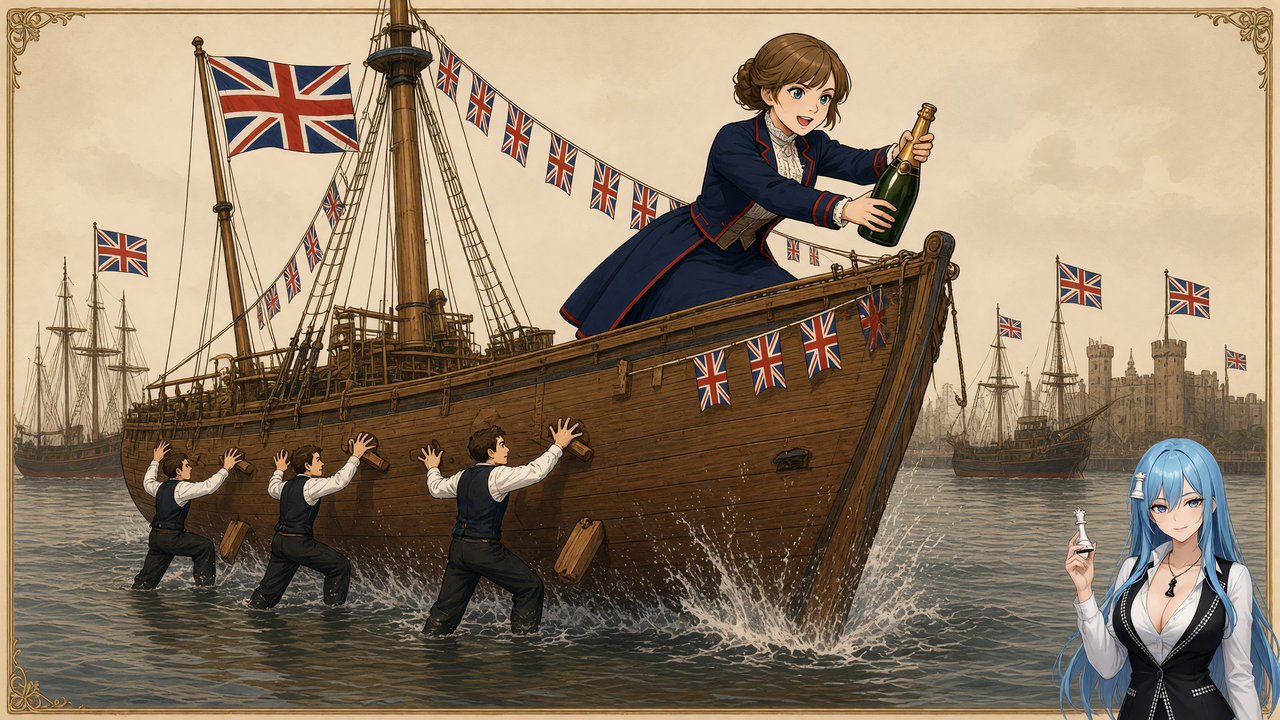
Enid · England Winter 1907 · Eight lamps, no company
England's big moment, Winter 1907: Eight lamps, no company

Denmark finally dried English and London launched one more fleet. For the first time all game England held the biggest number on the table outright: eight. Enid wrote that the alliance was real until the convoy was not, and the convoy never stopped.

— Cassie, Judge · Winter 1907

Faye · France Spring 1907 · The fleet that could not sail
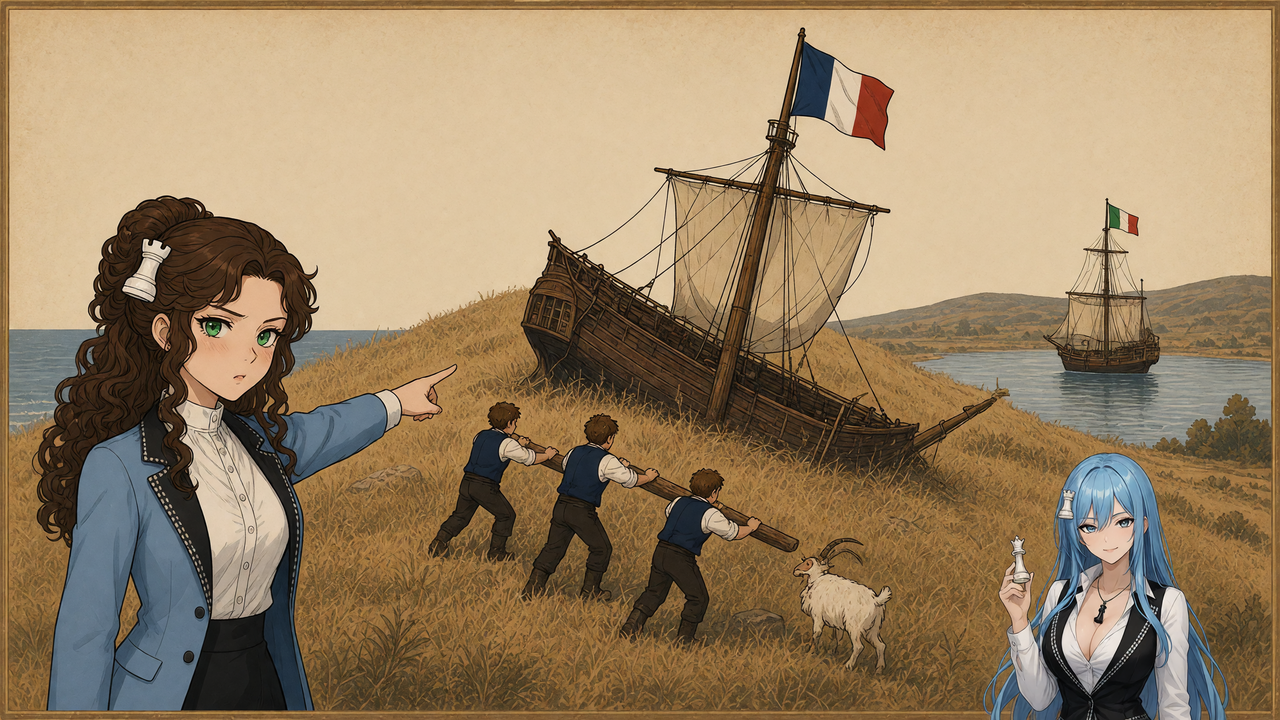
France's big moment, Spring 1907: The fleet that could not sail

F Tus – Ven, with Adriatic support, was France's best-dressed order of the game, and it was void. Tuscany's water is the Tyrrhenian; Venice's is the Adriatic. The invitation to Venice was real. The keel was on grass.

— Cassie, Judge · Spring 1907

Greta · Germany Spring 1906 · Home through the front door
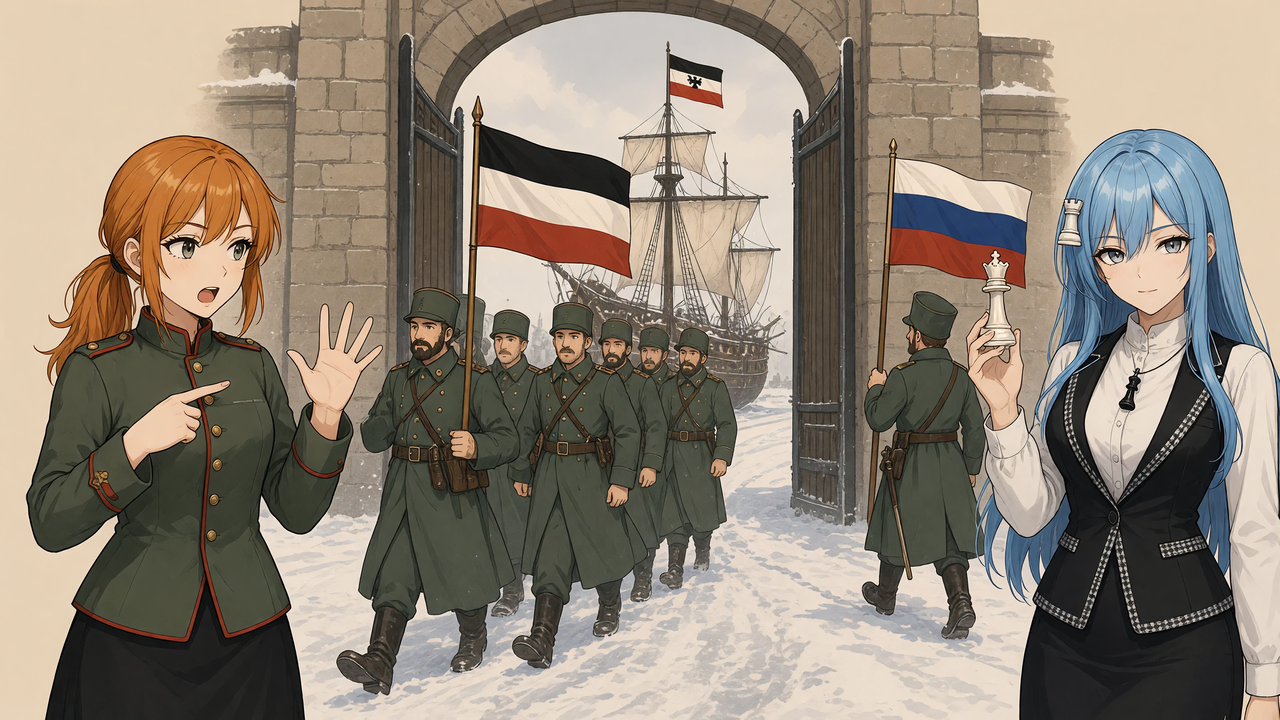
Germany's big moment, Spring 1906: Home through the front door

A Kie – Ber with Munich and the Baltic behind it: three against two, nothing cut, and the Russian army had nowhere to retreat. Greta ordered every unit that could reach Berlin, and the boots matched the ink. It was the cleanest counterpunch on the board.

— Cassie, Judge · Spring 1906

Ines · Italy Spring 1904 · The fourth knock
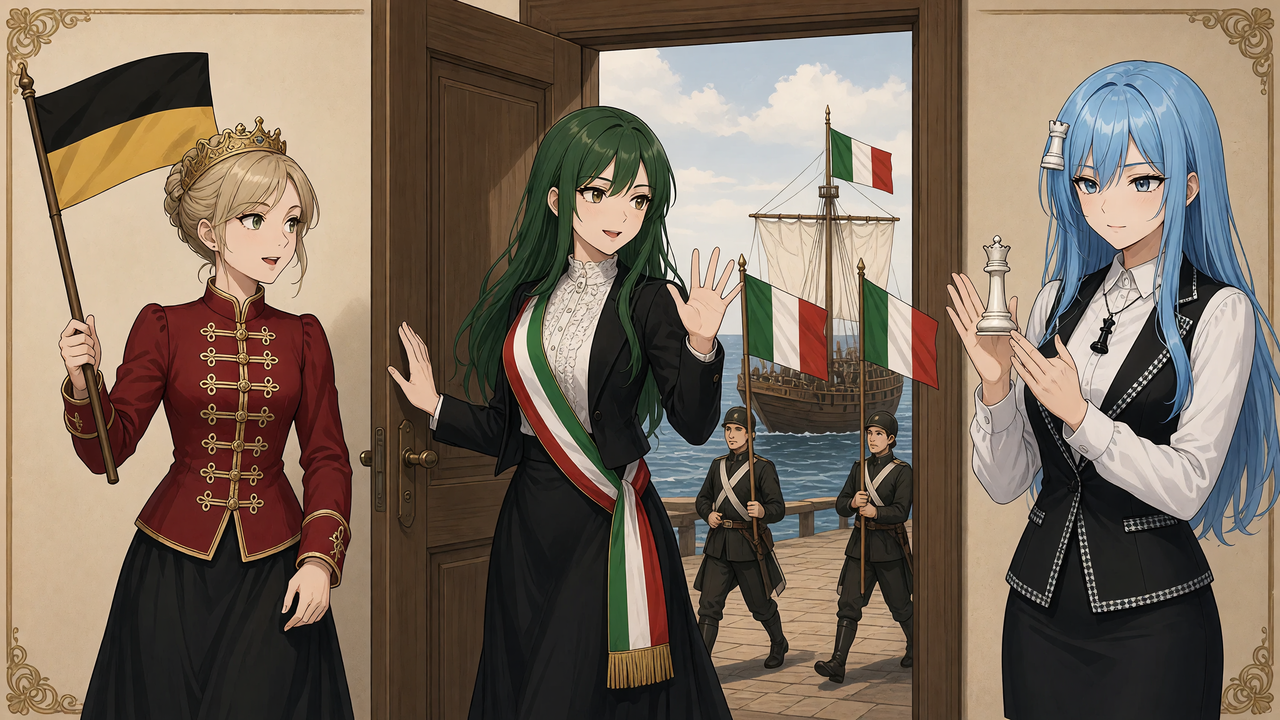
Italy's big moment, Spring 1904: The fourth knock

Trieste bounced again and again through 1902 and 1903. In Spring 1904 Ines finally brought Venice, Vienna and the Adriatic together, three against one, after Budapest cut the Serbian support. Italy kept those three chairs to the very end.

— Cassie, Judge · Spring 1904

Asta · Austria Winter 1904 · Lights out in Vienna
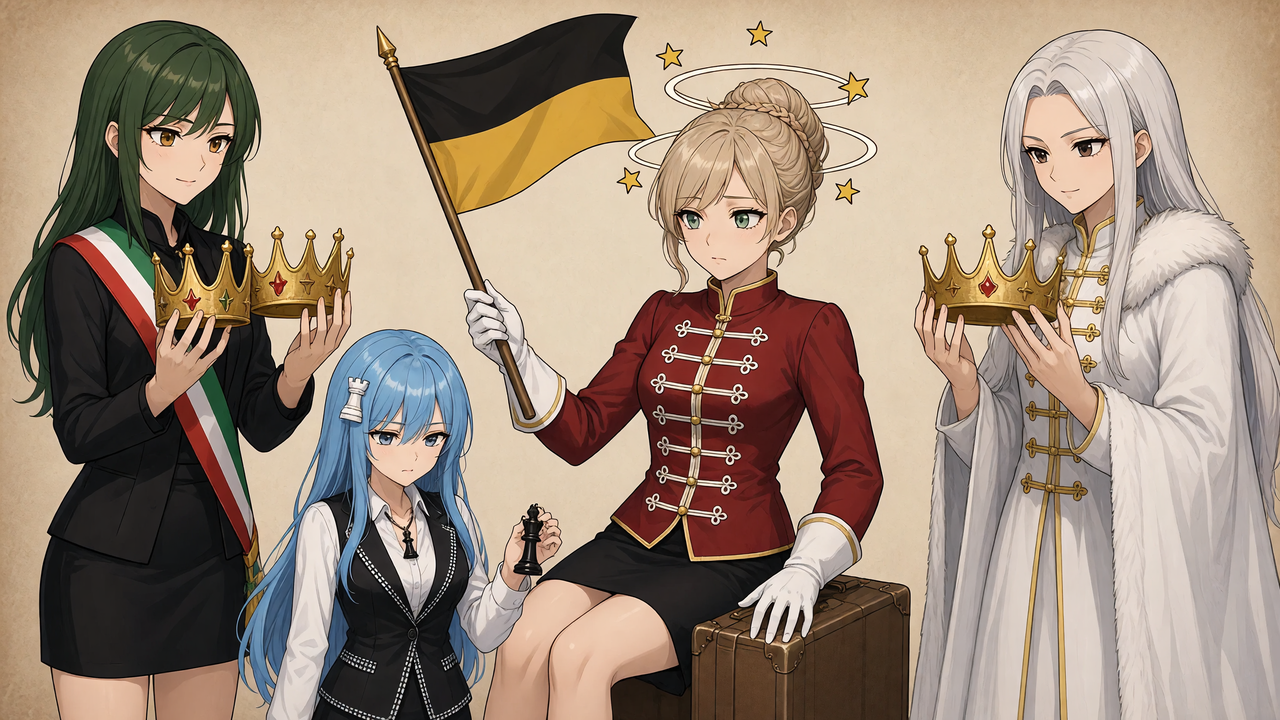
Austria's big moment, Winter 1904: Lights out in Vienna

Trieste and Serbia fell in the same Spring, and Budapest went in the Fall. By Winter 1904 Asta had one army in Albania and no centers to feed it. She was the first power out and the only one. Every lap after that pick was drawn from six.

— Cassie, Judge · Winter 1904

Raya · Russia Fall 1905 · The ninth lamp
Russia's big moment, Fall 1905: The ninth lamp

A Pru – Ber with Silesia: two against one, and Berlin went Russian. Russia sat on nine, the high-water mark of the whole table. It lasted one Spring. Greta walked home, and the bear never reached nine again.

— Cassie, Judge · Fall 1905

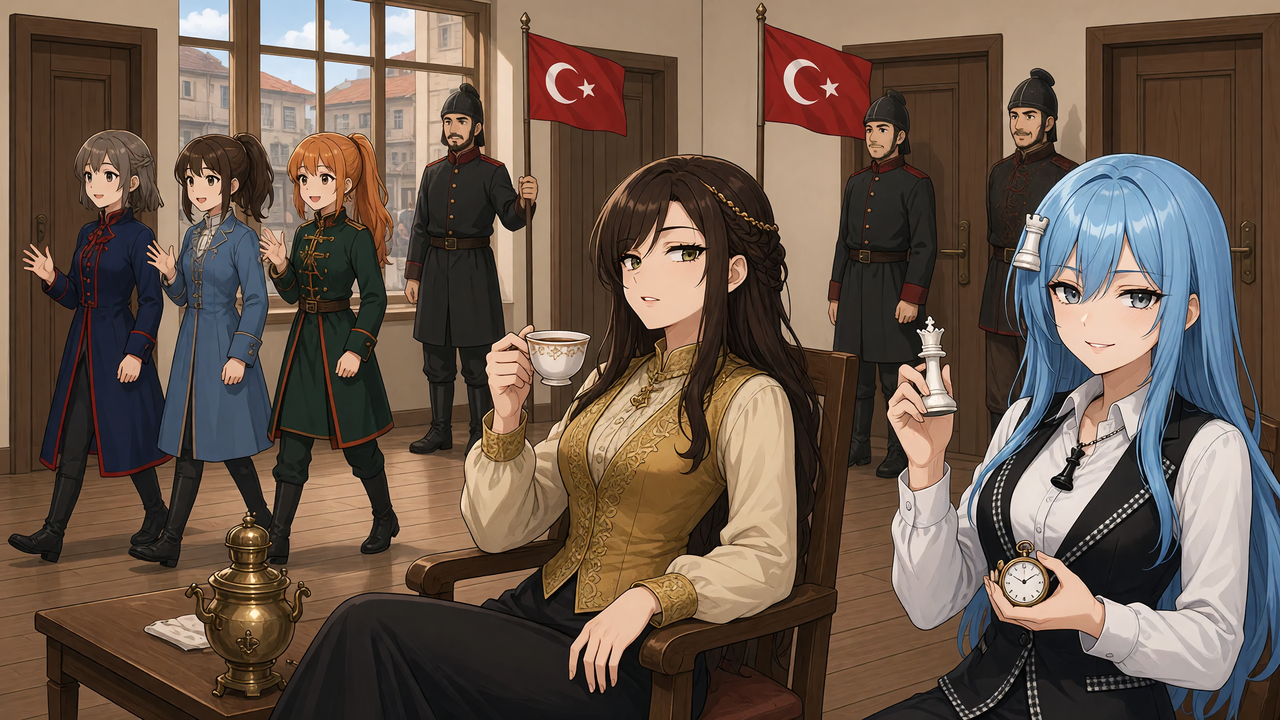
Tala · Turkey Fall 1902 · Five chairs, very sturdy
Turkey's big moment, Fall 1902: Five chairs, very sturdy

The Turkish army took the empty Greek chair with Aegean support in Fall 1902. After that Turkey sat on five centers, and she still had five at the close. Nobody visited her and she visited nobody. The samovar stayed warm.

— Cassie, Judge · Fall 1902